
Why Newborns Love Being Swaddled: The Science Behind Feeling Secure

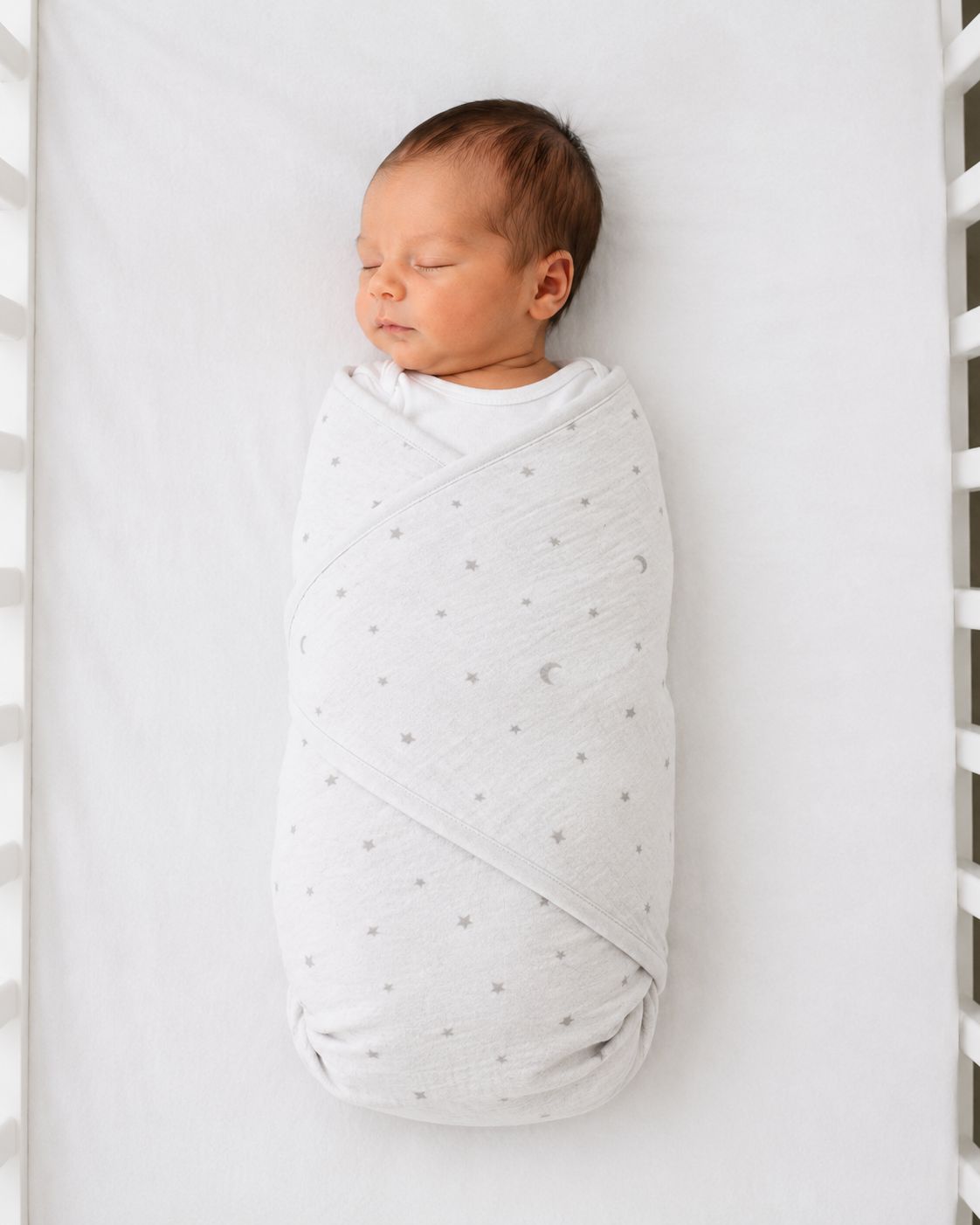
Quick answer
Many newborns seem to calm almost instantly when they're wrapped snugly in a swaddle. Parents often describe the transformation as remarkable—one moment their baby is restless and flailing their arms, and the next they're relaxed and peacefully asleep.
Swaddling has been used across cultures for centuries, but its benefits aren't simply based on tradition. For many newborns, swaddling recreates some of the comfort and security they experienced before birth. When practiced safely and appropriately, it can be a helpful tool for soothing young infants during the early weeks of life.
Understanding why babies respond so well to swaddling—and knowing when to stop—helps families use this technique safely and confidently.
Key Takeaways
- Swaddling can help many newborns feel calm and secure.
- It may reduce the effects of the Moro (startle) reflex.
- Swaddling mimics the snug environment of the womb.
- Not every baby enjoys being swaddled.
- Swaddling must always be practiced safely.
- Swaddling should stop as soon as a baby shows signs of rolling.
Why Do Babies Like Being Swaddled?
It Feels Familiar
Before birth, babies spend months in a warm, snug environment where movement is naturally limited.
Inside the womb they experience:
- Gentle pressure
- Constant warmth
- Curled positioning
- Continuous movement
- Familiar sounds
After birth, the world suddenly becomes open, bright, cool, and full of unexpected sensations.
Swaddling recreates some of the secure feeling babies experienced before birth, making the transition to life outside the womb a little easier.
It Helps Reduce the Startle Reflex
One of the biggest reasons many newborns enjoy swaddling is because it helps minimize the Moro (startle) reflex.
Without a swaddle, babies may suddenly:
- Throw their arms outward
- Open their hands
- Wake themselves from sleep
- Begin crying
A properly fitted swaddle gently limits these sudden arm movements, helping some babies sleep more peacefully.
Does Every Baby Like Being Swaddled?
No.
Just like adults, babies have individual preferences.
Some newborns settle almost immediately when swaddled.
Others prefer:
- One arm out
- Both arms free
- Sleep sacks instead of swaddles
- No swaddle at all
Parents should observe their baby's responses rather than assuming every infant enjoys the same soothing techniques.
Can Swaddling Help Babies Sleep Longer?
Swaddling may help some babies settle more easily by reducing unnecessary awakenings caused by the startle reflex.
However, swaddling is not a guarantee of longer sleep.
Babies still wake because of:
- Hunger
- Normal sleep cycles
- Growth spurts
- Developmental changes
- The need for comfort
Healthy newborn sleep is driven primarily by biology—not by any single sleep product or technique.
Safe Swaddling Is Essential
While swaddling can be beneficial, it must always be practiced safely.
Current recommendations include:
- Always place babies on their back to sleep.
- Keep the swaddle snug around the upper body but loose around the hips and legs.
- Avoid overheating.
- Never place loose blankets over a swaddled baby.
- Stop swaddling immediately once a baby shows signs of attempting to roll.
Safe sleep recommendations always take priority over convenience.
When Should Parents Stop Swaddling?
One of the most important safety recommendations is knowing when to stop.
Swaddling should be discontinued as soon as a baby begins showing signs of rolling or attempting to roll.
At that point, babies should transition to an arms-free sleep sack or other wearable blanket approved for safe sleep.
What Does the Research Say?
The American Academy of Pediatrics recognizes that swaddling may be an effective soothing technique for some young infants when practiced safely.
However, research also emphasizes that swaddled babies should always be placed on their backs to sleep and that swaddling should end when rolling begins to reduce the risk of sleep-related injury.
Like many newborn care practices, swaddling is most beneficial when paired with evidence-based safe sleep recommendations.
Why Education Matters
Many families receive conflicting advice about swaddling.
Some are told every baby must be swaddled, while others are advised to avoid it altogether.
The truth is more balanced.
Education helps families understand:
- Why swaddling works for many babies
- When it may not be appropriate
- How to swaddle safely
- When to transition out of the swaddle
- How to support healthy sleep without relying on myths
Knowledge allows parents to make informed decisions based on their baby's individual needs.
Interested in Learning More About Newborn Development?
Whether you're a parent, nanny, postpartum doula, nurse, or aspiring Newborn Care Specialist, understanding newborn sleep and soothing techniques is an important part of providing evidence-based care.
If you're interested in expanding your knowledge or pursuing professional newborn care education, take our free NCS Training Path Quiz. Based on your goals and experience, we'll recommend the Newborn Care Solutions educational pathway that's right for you.
Take the quiz here:
Find your training path
References
American Academy of Pediatrics – Safe Sleep Recommendations
https://publications.aap.org/pediatrics/article/150/1/e2022057990/188304
HealthyChildren.org – Swaddling and Safe Sleep
https://www.healthychildren.org
International Hip Dysplasia Institute – Safe Swaddling
https://hipdysplasia.org
Final Thoughts
For many newborns, swaddling provides a sense of comfort and familiarity during the remarkable transition from the womb to the outside world. When used correctly, it can be a valuable tool for calming young infants and supporting restful sleep while respecting their developmental needs.
Like all aspects of newborn care, swaddling is most effective when paired with current evidence-based guidance and an understanding that every baby is unique. Sometimes the goal isn't finding one technique that works for every infant—it's learning why certain approaches work and using them safely to support each baby's individual journey.
Back to the Journal